It Really Ain’t Romantic
Nothing in this batch was particularly romantic, which is fine. Not everything has to be and I’m not a super-romantic person (my engagement story involves a casual mutual agreement that yeah, we might as well get engaged. On an airplane. On the way back from Vegas where we almost eloped but couldn’t find a Rabbi Wayne Newton). While I enjoy a good romance from time to time, it isn’t a necessary plot point for me and, sometimes, I even enjoy books that forgo it entirely - I like to see how people write stories without a topic that generally does a lot of a text’s heavy lifting.
April 14th, 2026
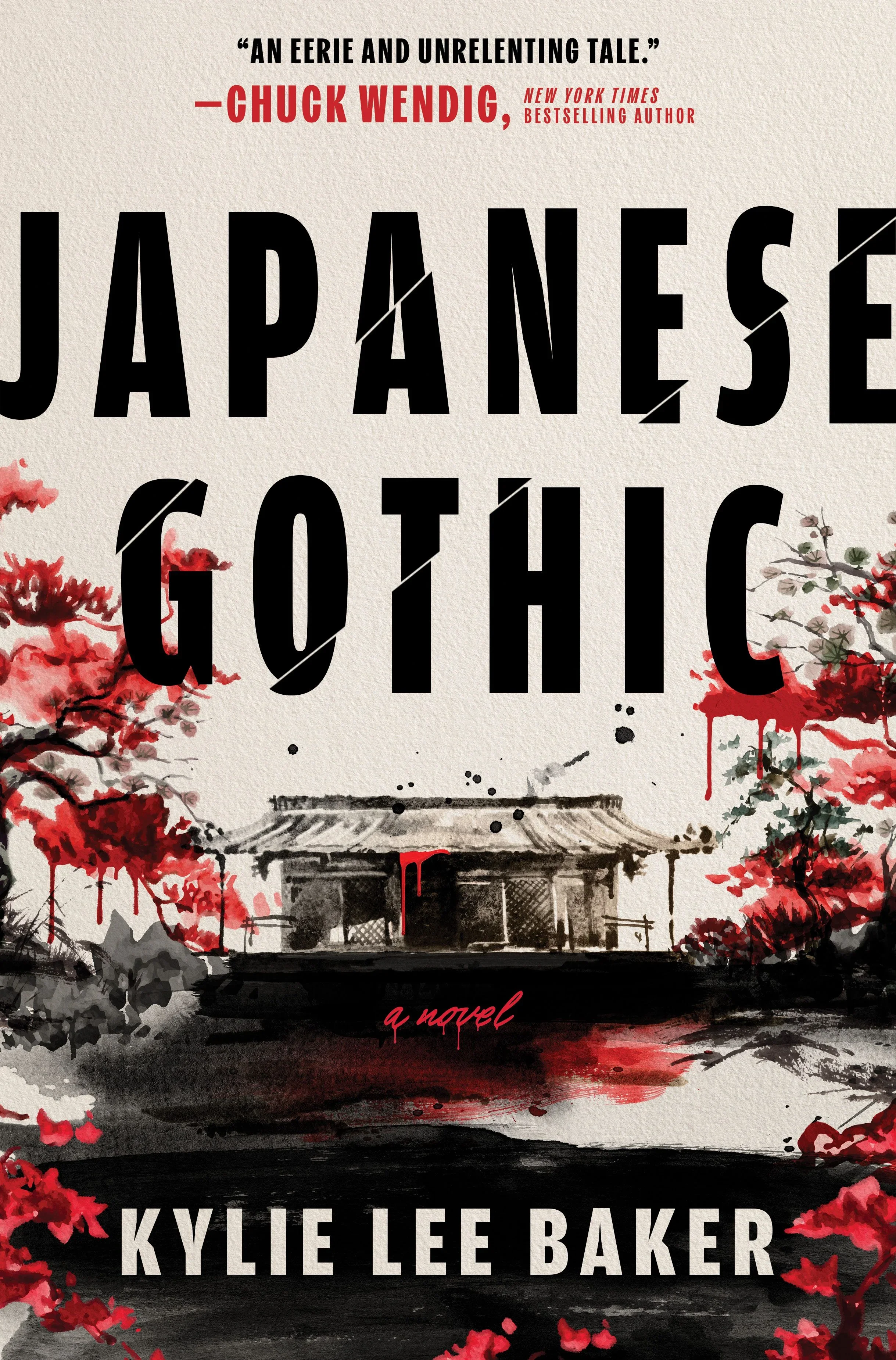
Another standout from Kylie Lee Baker (Bat Eater and Other Names for Cora Zeng), this one set at a remote house in the forests of Japan and in a house haunted by cruelty, terror, and murder.
Who are we? Are we our memories? How can we trust our mind when we act with no witnesses? When those we count on for witness lie? What happens when the principals we hold dear prove meaningless because they’re based on the lies of others? When everything we know is build on a crumbling foundation of meanness and filth?
Japanese Gothic asks these questions and so many more, the commentary wrapped in two haunting, parallel stories that intersect at strange and pivotal moments, and in the people of two unreliable narrators. Each of these narrators trying desperately to survive in the world others have created around and despite them, the children of horrifically selfish parents who have suffered their own trauma but who refuse to consider the ways their behavior affects the children they brought into the world, that the young lives suffer terribly because the adults won’t give a millimeter.
It is also a genuinely creepy horror novel with the perfect amount of blood and guts, a perfect balance of: is it the product of a disturbed mind or is it truly supernatural. It would have been easy to slide a romance in to fill up some space and add some words using the forced proximity trope but Baker doesn’t go there and the book is that much stronger for it.
Five out of five stars for Japanese Gothic and I can’t wait for the next.
March 24, 2026
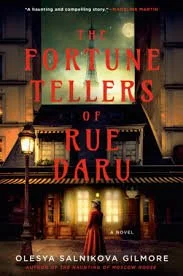
The Russian diaspora community in Paris is haunted by a Romanoff Grand Duke who was murdered in a tea house/fortune telling parlor run by two women intimately involved with his past.
I think that post-Revolutionary period of Russian history is fascinating, especially as a Jew whose family came over prior to said Revolution. For those of you who don’t know, that’s pretty unusual: most people my age have grandparents who came over after WWII but all of my grandparents, and even one of my great-grandparents, were born in the States (my father’s maternal grandmother, if you’re curious. She was born in Atlanta; there was a contingent that came in. on a Southern route). Most of those who did leave Russia, didn’t come directly to the United States - it wasn’t a great time for Jewish or Russian immigrants (there was a contingent of my family that went to Cuba and stayed until Castro kicked them out). No matter where people landed, however, there are certain commonalities, and reading books, be they historical or be they fiction, that feel a little bit like coming home.
The Fortune Tellers of Rue Daru has the added element of the supernatural, of real fortune tellers and those who can connected with the dead, that makes it even more engaging.
What I really liked, however, beyond the story, which is a fantastic supernatural mystery, is that the novel makes a point of portraying early 20th century women as a varied group, which few historical novels I’ve read have bothered to do. Some are married, some are single. Some are rich, some are poor. Some own property. Run businesses. There are single mothers. Some run businesses. Some are sex workers but not all of the unmarried working women are (sex work is work, but often in these books, every woman with a job is a sex workers and it’s important here that they’re not). They’re in control of their love lives, their fertility, and their futures. Because the reality is, while that wasn’t true for all women, it was, and always has, been true of some women and we forget that. But it’s March, Women’s History month, in a time when our rights are being taken away, where they’re trying to make us into a blonde, implanted monolith and it’s important to remember we never have been what they want us to be and we’ll need to fight to make sure we never are.
This is a weird ass book.
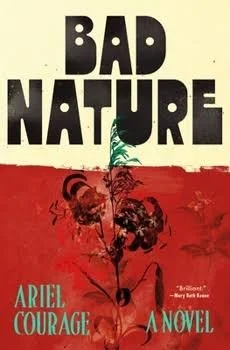
Hester is diagnosed with terminal cancer. She decides to drive cross country to murder her estranged father. Honestly, he has it coming. On her way, she meets John, an eco-terrorist (sort of), picks him up, and decides their journey should be a joint one.
What would you do if you had six months to be absolutely, utterly, and completely selfish? Would it be liberating? Would you be able to do it? Do you think it would make you a better person or a horrible one? Can you make a value judgment on someone who is terminally ill? Is there someone you would murder if you could, essentially, get away with it? If they had done something horrible, would that murder make you a bad person or a good one? What is good? What is bad? Are they relative? Who gets to decide?
These are all questions I asked myself while I was reading Bad Nature and questions I’ve continued to ask myself since finishing. Are there actually people who have it coming? Does morality shift when the rules of society loosen their hold on you? Can you ever really have nothing to lose? What would I do if I could get away without being punished? Does my answer change whether or not I’m a good person?
I hope I’ll never find out. But I am a little curious. I think.
Maybe not…
This book is not a romance.
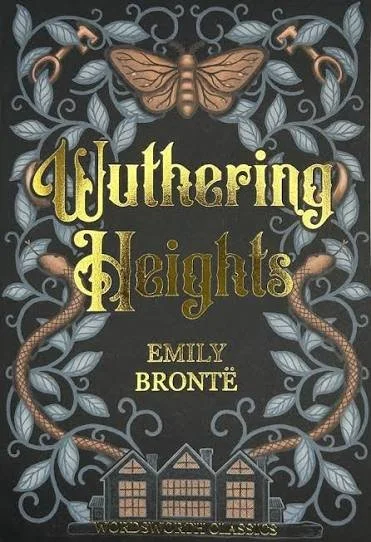
It’s about horrible toxic people doing horrible toxic things. I hated it. It was awful.
Back when I still read the canon because I thought I had to, you were either a Brönte girl or an Austen girl. You could add Wharton to either and if you were very, very naughty, you read Lady Chatterly’s Lover for fun (the carriage was literally a’rockin’). I was an Austen girl and, having listened to this terrible, terrible book, I remember why.
Dark comedy is a thing. If you’re going to make everyone in a book awful, at least make them funny.
If you saw romance in Wuthering Heights, there is something deeply wrong with you.
The end.
Thus, we reach the end of no-romance week. There will probably be another one at some point totally by accident like this one.
On to the next!